

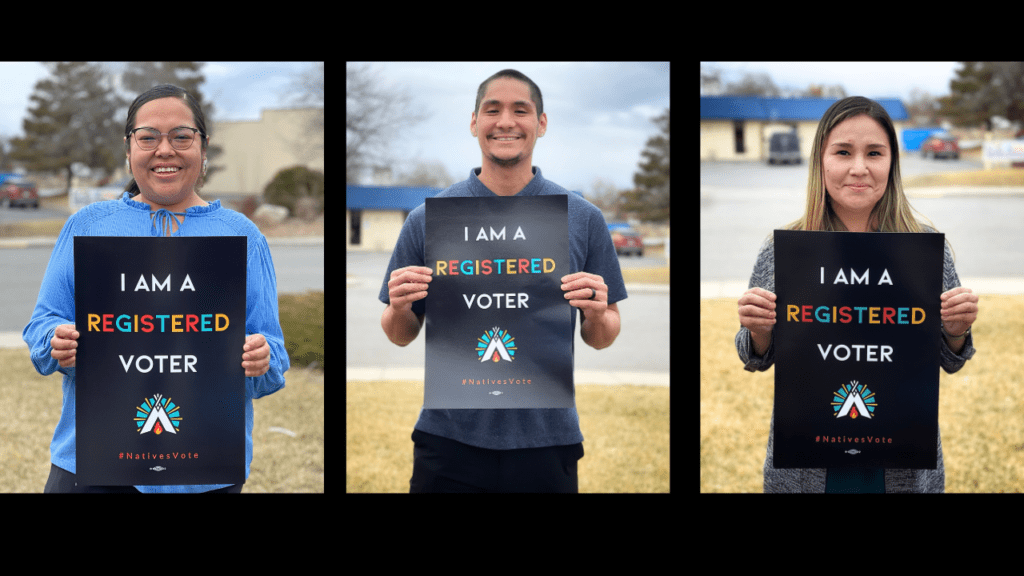
Montana’s primary elections provide a platform for Native Americans to influence decisions and policies that affect our communities and lands. Given the historical challenges in voting access, our participation in primary elections is essential for ensuring candidates representing our voices and interests move into the general election. Here’s how we build Native power when we vote in the Montana primary:
- Building Influence Through Representation:
Montana boasts the highest number of Native representatives in its state legislature compared to any other state, with 11 Native representatives who served in the 2023 State Legislature. Leaders such as Shane Morigeau, Susan Webber, and Jonathan Windy Boy have made significant strides in addressing key issues, from legal reforms to education and cultural preservation. Their involvement underscores the power of Native voters to elect representatives who genuinely reflect our community’s values and needs. This strong representation is a testament to our communities’ active engagement and influence in Montana’s political process. When we vote in the primary, we build long-term political influence by choosing candidates who come directly from our communities and represent our unique needs. - Impact Local and National Policies:
Native American participation in Montana’s primaries and general elections has a profound impact on both local and national policies. When we vote, we influence not only the selection of representatives but also the policies those representatives will prioritize. Here are key ways our vote matters:
Advocacy for Tribal Sovereignty and Rights: We have the power to support candidates who champion tribal sovereignty and our rights. This includes backing initiatives that protect land rights, ensure responsible resource management, and uphold treaty obligations. Legislative victories, such as the strengthening of the Indian Child Welfare Act (ICWA) in Montana, underscore the importance of electing leaders committed to these principles.
Enhanced Healthcare and Education: The termination of healthcare coverage for over 20,000 of our community members, including 11,500 children, in a recent year highlights the critical need for responsive health policies. Voting for candidates who understand and commit to improving healthcare access and quality for our communities can lead to substantive changes. Similarly, we can influence educational policies to better serve tribal schools and support cultural education, essential for preserving our heritage and improving academic achievement.
Economic Development and Job Creation: Economic issues are paramount, especially in areas with significant Native populations. By engaging in the electoral process, we can push for policies that promote economic development, support Native-owned businesses, and create jobs within reservations. This also includes advocating for fair employment practices and equitable economic opportunities.
Environmental Protection: Many of our communities are directly affected by environmental issues due to our ancestral and cultural ties to the land. We can influence environmental policies to ensure sustainable management of natural resources and protection against harmful industrial impacts. Supporting candidates who prioritize environmental justice can lead to stronger conservation efforts and respect for our tribal lands.
Addressing the MMIW Crisis: The issue of missing and murdered Indigenous women (MMIW) has gained national attention, but much remains to be done. By participating in elections, we can ensure that this crisis remains a priority for lawmakers. Electing officials who will allocate resources, improve law enforcement practices on reservations, and collaborate with tribal authorities can help address this pervasive issue. - Strengthening Sovereignty:
Voting in elections is crucial for Native communities because it’s a key way we express and maintain our sovereignty. By participating in elections, we have a say in choosing leaders who understand and respect our rights to manage our own affairs and resources. Each vote from our community is a powerful statement: “We are here, and we demand to govern ourselves.” Voting ensures that laws and policies reflect our needs and uphold our treaties with other governments. For example, the Crow Tribe in Montana has been very active in working with both state and federal governments to manage natural resources effectively. Their involvement in elections has been key to electing officials who respect and support these important discussions. This not only strengthens their sovereignty but also ensures their rights to manage their resources. Moreover, by voting, we strengthen our ability to form alliances with different groups and governments, enhancing our support network. This collaboration is essential in safeguarding our sovereign rights and independence. - Setting a Precedent for Future Generations:
When we vote, we do more than just select our leaders. We set an example for the younger members of our community, showing them the importance of participating in our democracy. Every election is an opportunity to teach our youth about the power of their voice and the role they play in shaping our future. Engaging in elections isn’t just about the here and now; it’s about laying the groundwork for future generations. Our involvement demonstrates to our children and teenagers that their culture, rights, and voices matter. It instills a sense of responsibility and pride, encouraging them to stay informed, to stand up for their beliefs, and to participate actively in political processes as they grow. Moreover, by voting, we help ensure that the leaders we choose today are those who will consider the long-term well-being of our community. We’re not just voting for current benefits, but for a sustainable future that respects our traditions, protects our lands, and upholds our rights. - Addressing Specific Community Needs:
Voting empowers us to tackle the unique challenges within our communities. By engaging in elections, we ensure that our specific needs—like healthcare, education, or infrastructure—are addressed by our leaders. Take, for example, the Fort Peck Reservation in Montana, which struggled with access to clean water and healthcare services. Through active voting, the community elected representatives who prioritized and successfully secured funding for these critical areas, improving daily life for residents. Our votes influence leaders to focus on solutions that directly benefit us, ensuring our communities receive the necessary support and attention.
Our engagement in Montana’s electoral processes is more than a civic duty; it’s a powerful form of advocacy for our communities. By voting, we not only influence the present—ensuring our needs and rights are addressed—but we also lay the groundwork for future generations. Each election is an opportunity to strengthen our sovereignty, address our unique community needs, and set a powerful example for our youth.
The act of voting embodies our resilience and commitment to self-determination. It is essential that we continue to participate actively in every election, ensuring that our voices are heard and that our influence in shaping policies remains strong. Let’s empower our communities by showing up at the polls, for every primary and general election, to make certain our rights, traditions, and future are safeguarded and respected.